 Austin: (512) 881-9790
 Directions


As a car owner, you understand that oil and filter replacements are essential to keeping your engine’s internals running smoothly. Over time, the oil in your system will accumulate contaminants and break down due to extreme heat, weakening the lubricative properties and allowing harmful friction to occur in the engine.
Oil changes are often the first automotive DIY anyone tries, and for good reason; they’re generally quick and easy services that can be completed with limited tools. However, selecting the right oil to replace it is just as important as doing the service in the first place, as improper oil choice can leave your motor without the full protection it needs.
In this article, we’ll go over the various types of oil, the differences between each, and which you should pick up for your next at-home oil change.
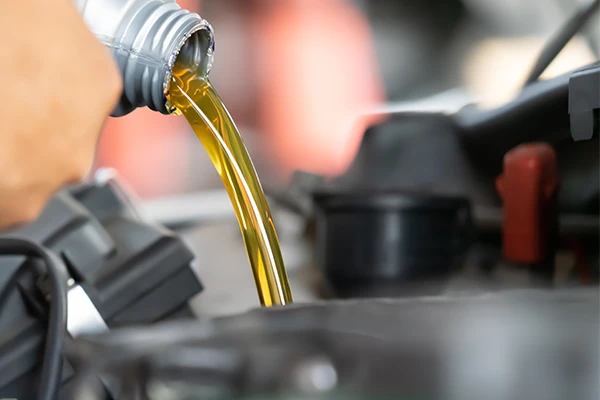
Oil Weight
When it comes to oil, there are multiple different factors having a large impact on how the oil interacts with your engine’s internals. A big one that determines what goes into your vehicle is oil weight, also referred to as grade or viscosity. Weight is graded on a scale developed by the Society of Automotive Engineers (SAE) and determines the thickness of the oil.
Different vehicles require different weights of oil. For instance, 5W-20 is one of the most common oil grades for modern vehicles. The first number (5W) refers to the oil’s properties in cold temperatures (W for Winter). The lower the number is, the easier time it will have flowing in cold conditions, while the higher numbers signal an oil that won’t flow as efficiently at these temperatures.
Oil Types
Oil weight is only one factor when determining the right oil for your vehicle, as you should always consider the different types of oil and their pros and cons. While all oil is meant to accomplish the same task, not all oil is formulated the same way, and each method has upsides and drawbacks that may influence your decision. Below we’ve listed the three types of oil you can use and their respective pros and cons.
Conventional Oil
Conventional oil is the traditional formulation of oil produced from crude oil that has been refined to remove some of the contaminants and mixed with various additives to provide further protection to your engine. While conventional oil is refined, it tends to degrade more quickly than most and saturate with contaminants, weakening the protective properties of the oil, which may cause engine damage if left ignored.
The biggest advantage of conventional oil is the price; it’s the least expensive option compared to the other oil types. However, due to conventional oil degrading quicker than the other three oil types, you’ll find yourself replacing your oil sooner than if you used a synthetic or synthetic blend.
Synthetic Oil
Although the name might imply otherwise, synthetic oil isn’t made entirely from synthetic materials. Synthetic motor oils are generally made using chemically engineered and/or highly refined base oils, depending on the formulation. This results in a higher-quality base oil and a molecular structure that allows synthetic oils to offer better protection and resist oxidation more effectively than conventional oils.
The main drawback of synthetic oils is their higher cost—an oil change using synthetics can be two to three times more expensive than with conventional oil. However, because synthetic oil lasts longer, you won’t need to change it as often, which can lead to savings over time.
Synthetic Blend
If you’re looking for a balance between price and longevity, synthetic blends combine conventional and synthetic base oils, offering some of the performance advantages of synthetic oil at a lower cost than many full-synthetic formulations. In most modern vehicles, manufacturers may recommend synthetic blends as the minimum oil quality. While synthetic blends won’t last as long as full synthetics, they will outperform conventional oils despite being slightly more expensive.
Oil Change Services at Edgestone Automotive
When it’s time for an oil change, trust the experts at Edgestone Automotive. Our expert technicians will keep your engine running smoothly with complete oil maintenance services that best suit your vehicle. We only use the best quality brands of motor oil as well as the appropriate grades and types-conventional, synthetic, blends, and more. Give us a call or schedule online today!