 (512) 288-5050
 10908 US-290 Austin, TX 78737
Common Suspension Issues To Look Out For
Your steering system experiences constant abuse over its lifespan, as it absorbs the counteracting forces of the chassis and road surface. Maintaining your steering and suspension systems is vital to the safety of you and your passengers, as even less severe suspension issues can lead to harsh jolts and decreased handling ability. In this article, we cover common suspension issues and what to look out for.
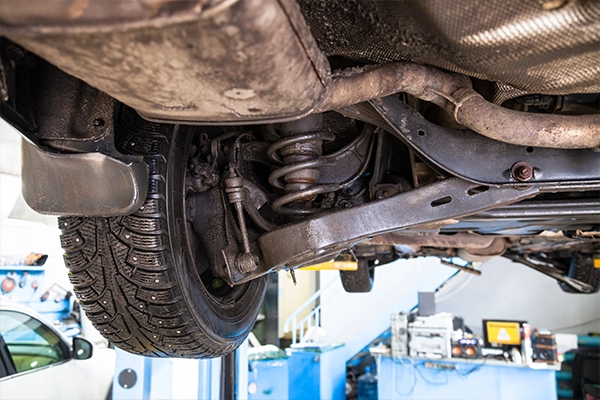
What Makes Up Your Suspension?
Generally, modern suspension systems are made up of hundreds of individual components, some of the most important being the shocks and springs, which absorb the energy from road impacts. Other components, like the bushings, bearings, and joints, allow for parts like the sway bars to flex and articulate independently with the wheels.
The suspension system overlaps significantly with the steering system, which relies on the proper alignment of the camber, caster, and toe angles to keep the wheels pointing perfectly straight at all times.
Symptoms of Suspension Issues
When it comes to suspension system issues, they are quite often hard to miss. Drivers may notice problems through symptoms like unusual noises, excessive bouncing, or uneven tire wear. Addressing these issues promptly is essential to prevent further damage and maintain vehicle safety. Here are the most common suspension system issues you should watch out for.
Bouncy/Rough Ride
If you feel your vehicle “bouncing” over every bump on the road surface rather than absorbing them, you may be experiencing a failure of a shock, strut, or spring. Damaged energy-absorbing components like these will not be able to properly disperse the energy from road impacts, and in turn, may transfer that force to the vehicle’s chassis.
Vehicle Pulling to The Side
If your vehicle pulls to one side despite the steering wheel being straight, you may have a damaged or misaligned component within your suspension system. Your vehicle’s wheel alignment is heavily dependent on the condition of the suspension, as a single misaligned or broken component may cause the entire system to shift.
While a wheel alignment service from a trusted professional will return any misaligned components to the proper angle, a failed suspension component will require service and replacement.
If you’ve recently hit a pothole, speed bump, or curb with one of your wheels, there’s a chance the impact has shifted the alignment of important components. You should also have your wheels re-aligned after replacing your tires or suspension components, as the alignment will need to be adjusted accordingly.
Vehicle Dips While Braking
Another clear sign of suspension system issues is excessive dipping or diving while braking. This occurs when braking shifts the weight of momentum from the rear to the front of the vehicle, causing the nose to dive forward. Typically, the front suspension will resist this force and keep the vehicle level; however, a faulty component may allow for momentum to push down the front of the car.
Vehicle Feels Lopsided
If your vehicle feels lower on one side or corner, it may be due to a faulty suspension component. The suspension system not only keeps the car stable while driving, but also supports the weight of everything above it. When a component, such as a strut, fails, that corner of the vehicle may lack the necessary support, causing it to lean to that side.
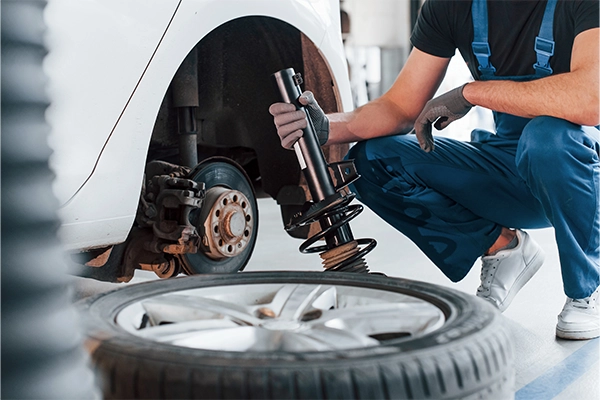
Suspension Repair in Austin
The steering and suspension experts at Edgestone Automotive in Austin, TX, have years of experience working on a variety of suspension systems on all makes and models. No matter the issue you’re experiencing, don’t let it continue to worsen. Trust your vehicle to the friendly and experienced team at Edgestone Automotive. Give us a call or schedule online today!